

Small appliances. Big impact.
Orthodontic appliances are specialized tools used alongside braces or clear aligners, or sometimes on their own, to guide jaw development, correct bite problems, and support tooth movement. Not everyone needs an appliance, but when recommended, each one serves a specific purpose in creating a healthier, more balanced smile.
Explore our favourite appliances below ↓
Our Favourite Appliances
-
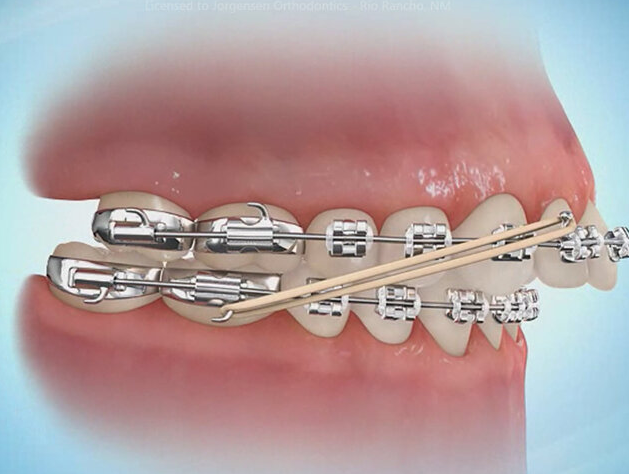
Elastics
Problem: Bite misalignment, such as overbite or underbite, can cause difficulty in chewing, speech issues.
Solution: Rubber bands apply gentle, consistent pressure to shift the teeth into proper alignment.
-

Expander
Problem: A narrow upper jaw that causes crowding and misalignment of the teeth, affecting bite and overall alignment.
Solution: The expander gently widens the upper jaw, creating space for proper teeth alignment, reducing crowding, and improving bite function.
-

Carriere
Problem: A Class II malocclusion (and high canine position), where the upper teeth and jaw protrude ahead of the lower teeth.
Solution: The Carriere, a bar attached to the top teeth, along with rubber bands, guide the upper jaw into proper alignment with the lower jaw, improving bite and facial balance.
-

Forsus
Problem: A Class II malocclusion, where the upper teeth and jaw protrude ahead of the lower teeth.
Solution: Forsus springs correct overbites by guiding the upper jaw into proper alignment with the lower jaw, improving bite and facial balance.
-

Xbow
Problem: A combination of a narrow upper jaw along with protruding upper teeth (Class II malocclusion)
Solution: The Xbow appliance (Forsus springs x expander) simultaneously improves upper jaw width and reduces overbite, creating the space needed to properly align the teeth and enhance the bite.
-
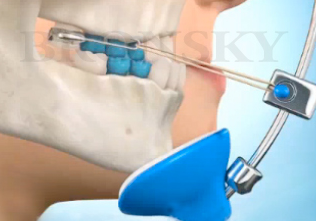
Protraction headgear
Problem: A Class III malocclusion, where the upper jaw and teeth are too far back relative to the lower, leading to an underbite, which can cause difficulty in biting, chewing, speaking.
Solution: Protraction headgear applies gentle pressure to the upper jaw to bring it into a more aligned position with the lower jaw, improving the underbite and facial balance.
-
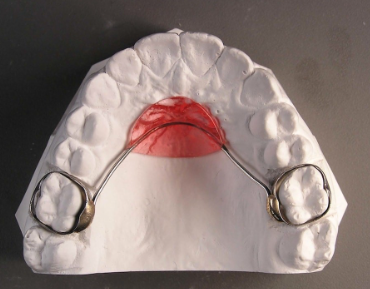
Space maintainers
Problem: Early loss of primary teeth, which can lead to shifting and misalignment of the surrounding teeth, or space loss for incoming permanent teeth.
Solution: Space maintainers, such as Nance, TPA (transpalatal arch), or LLA (Lower Lingual Arch), hold the space open for the permanent teeth, preventing crowding and misalignment.
-

TAD (Temporary anchorage device)
Problem: Complex tooth movements, where conventional braces may not provide sufficient support for desired tooth alignment.
Solution: TADs are small pins placed in the bone that provide a stable anchor allowing for precise, complex tooth movements that enhance the effectiveness of the treatment.
-

TAD-TPA
Problem: Complex tooth movements, where conventional braces may not provide sufficient support for desired tooth alignment.
Solution: TAD-TPA is used to stabilize the upper teeth and prevent unwanted movement during the course of treatment, ensuring that anchor teeth remain in their ideal positions while moving others.
-

Habit breaker
Problem: Finger sucking habits or forward tongue posture (tongue thrust) can disrupt proper tooth alignment and lead to open bites or other bite issues.
Solution: The Habit Breaker appliance helps eliminate harmful habits by providing a physical barrier that discourages finger sucking or improper tongue positioning.